What Are the Top Robotic Packing Machines for Global Buyers?
What are the top robotic packing machines for global buyers? The answer depends on product shape, packaging material, factory conditions, and service access. A robotic packing machine may handle cartons, cases, trays, pouches, or mixed product orders. No single model wins everywhere. That assumption often fails.
The International Federation of Robotics reported 541,302 industrial robots installed worldwide in 2023. Its World Robotics 2024 report also recorded more than 4.2 million industrial robots operating globally. These figures show stronger automation demand, but they do not guarantee a suitable packaging investment. PMMI research on packaging automation highlights labor pressure, uptime expectations, and easier changeovers as major buyer concerns. A fast arm is useful. A reliable one is better.
Practical evaluation requires more than catalog speed. Buyers should compare payload, reach, end-of-arm tooling, vision accuracy, safety functions, washdown protection, and software compatibility. A machine moving sealed cartons at a steady rhythm may struggle with slippery pouches or irregular products. Check the details. Ask for verified cycle-time tests using your real products, not sample boxes. Review spare-parts locations, remote support, operator training, and total cost over several years. A lower purchase price can hide expensive downtime.
This guide examines leading robotic packing machines by application, flexibility, integration, and global support. It will also consider installation experience, maintenance records, and documented performance. Some conclusions may remain conditional. Factory layouts differ. Product quality changes. The best choice is often the machine that performs consistently at 2 a.m., when a technician is not nearby.
What Defines the Top Robotic Packing Machines: Speed, Payload, and OEE
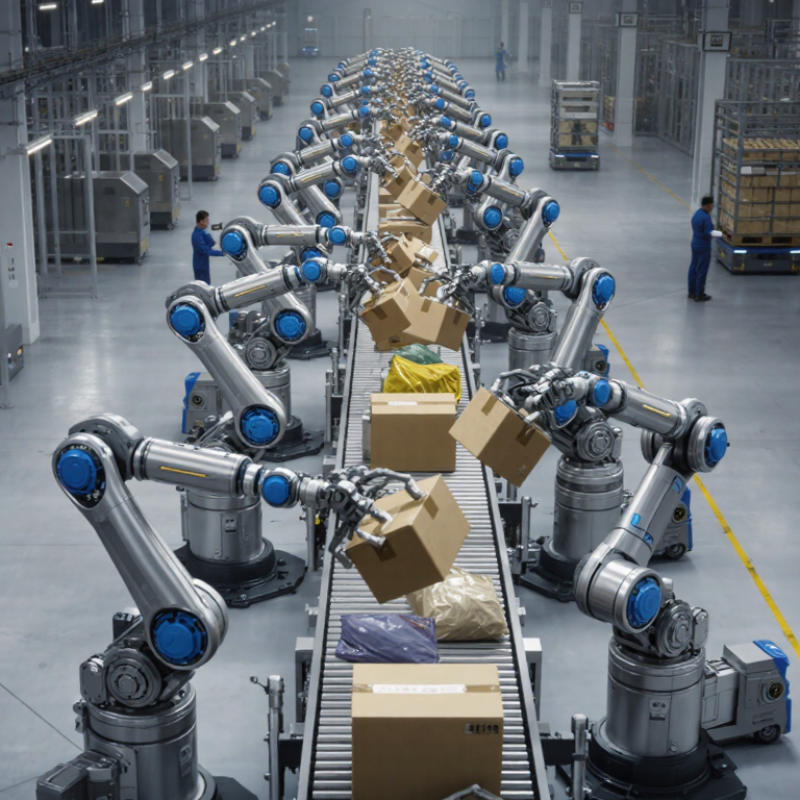
For global buyers, top robotic packing machines are not defined by speed alone. A fast arm may promise 35 picks per minute, yet lose time during carton changes or product jams. In factory trials, record cycle time beside actual packed cases per hour. That distinction matters. I once treated peak speed as decisive, but the line performed poorly during product changeovers.
Payload determines whether the robot handles the product, gripper, and safety margin together. A 10-kilogram package may require a higher-rated robot after tooling is installed. This is often missed. Ask for motion tests at full reach, not only near the wrist. Observe carton placement, seal alignment, and dropped-product rates. Small errors become expensive during an eight-hour shift.
OEE provides a more reliable operating picture. It combines availability, performance, and quality from real production data. Request downtime logs, reject counts, and changeover records before comparing machines. A system running at 92% speed with 98% quality may outperform a faster system with frequent stops. Still, OEE can be distorted by weak data collection. Buyers should verify sensor accuracy and measurement definitions during acceptance testing. Leave room for improvement. The most useful trial includes difficult cartons, uneven product flow, and recovery after an intentional stoppage.
Which Robotic Case Packers Deliver 15–40 Cases per Minute for Global Lines
Robotic case packers designed for 15–40 cases per minute support many global packaging lines. The best choice depends on product shape, case size, and packing pattern. Four-axis robots often handle stable cartons quickly, while six-axis robots offer greater flexibility for unusual orientations. A reliable system should maintain accurate placement without crushing corners or leaving empty spaces.
Speed is not everything. From practical line evaluations, gripper design often determines real output. Vacuum heads suit smooth cartons, while mechanical clamps can handle heavier or uneven packs. Buyers should request a factory acceptance test using their actual products and cases. The trial should measure sustained speed, reject rates, changeover time, and recovery after minor stoppages. A machine reaching 40 cases per minute for five minutes may not perform well across an entire shift.
Global lines also need clear safety documentation, accessible controls, spare-parts planning, and support for local electrical requirements. Tool-free adjustments can reduce changeover delays between case formats. Servo-driven axes usually improve positioning, but they can increase maintenance skill requirements. That trade-off deserves honest review. A perfect machine does not exist. Test it under load. Verify noise, guarding, cleaning access, and operator training before purchase. These details often separate a fast demonstration from dependable daily production.
How Vision, AI, and End-of-Arm Tools Improve Accuracy Beyond 99%
What Are the Top Robotic Packing Machines for Global Buyers?
Global buyers increasingly choose robotic packing machines with vision, artificial intelligence, and flexible end-of-arm tooling. The International Federation of Robotics reported 541,302 industrial robots installed worldwide in 2023. This growth reflects stronger demand for repeatable handling, faster changeovers, and measurable quality control.
Vision cameras inspect carton position, product orientation, seals, and missing items before packing. AI models can learn irregular shapes and adjust gripping paths without constant manual programming. In controlled production trials, combined vision and robotic systems may exceed 99% pick accuracy. However, that number depends on lighting, product variation, conveyor speed, and calibration. A dashboard can look perfect while rejected cartons increase downstream.
End-of-arm tools make the difference. Vacuum cups suit smooth cartons, while adaptive fingers handle fragile or uneven products. Quick-change tooling also reduces downtime between package sizes. The PMMI Packaging Automation report highlights labor availability and flexible automation as major industry concerns. Buyers should request test data using real products, not sample objects. They should also verify cleaning access, spare-part support, safety functions, and software compatibility across regions. One overlooked issue remains: AI needs good data. Poor images create confident mistakes.
How Buyers Verify ISO 10218 Safety, IP65 Protection, and Total Cost of Ownership
When comparing robotic packing machines, global buyers should verify safety at the cell level, not only inspect a robot certificate. ISO 10218 provides important requirements for industrial robot safety, but integration changes the risk profile. Ask for the current declaration, risk assessment, validation records, and emergency-stop test results. Check guarding distances, door interlocks, teach-mode controls, and restart procedures. A neat file is useful. It is not proof by itself.
IP65 protection should also be tested against the actual factory environment. The first digit indicates resistance to dust ingress, while the second covers water jets. It does not mean safe immersion or unlimited washdown exposure. Buyers should inspect cable glands, cabinet seals, connectors, and drainage points. Request test conditions, not just an IP rating. Photos from a clean showroom can hide weak sealing around moving joints.
Total cost of ownership needs more than the purchase price. Compare energy use, compressed-air demand, tooling changes, spare-part availability, software support, operator training, and planned maintenance. Estimate downtime using realistic shift patterns. A low-cost machine may become expensive after repeated gripper failures or difficult troubleshooting. I would also ask for a five-year service model, although predictions remain imperfect. Production mix, packaging variation, and local technicians can change the result. Pilot testing is often wiser than trusting a polished spreadsheet.