Choosing a lidding film machine in 2026 requires more than comparing speed and price. It requires evidence.
The Flexible Packaging Association reported approximately $42.9 billion in U.S. flexible packaging sales during 2023. Its 2024 industry report also highlights pressure on material efficiency, recyclability, and production reliability. These trends affect every sealing line. They also expose weak equipment decisions.
Smithers’ report, The Future of Packaging Films to 2028, identifies barrier performance, downgauging, and sustainable film development as major market priorities. Therefore, a suitable lidding film machine must handle changing film structures, not only today’s standard rolls. Check sealing temperature, dwell time, web tension, indexing accuracy, and changeover design. Watch the machine running. Listen for unstable movement. Inspect the seal after cooling.
As packaging machinery specialist Tom Egan of PMMI has emphasized, “Automation is one of the key solutions to the labor shortage.” That principle matters here, but automation alone cannot rescue poor integration. A fast machine may still waste film, create inconsistent seals, or require difficult maintenance. No machine is perfect.
The following guide compares output, sealing control, compatibility, hygiene, energy use, service support, and total ownership cost. It also questions common assumptions. A lower purchase price may become expensive beside frequent downtime. A higher-speed model may perform badly with delicate films. Real production samples matter more than impressive brochures. Use tested data, operator experience, and supplier transparency before making the final choice.
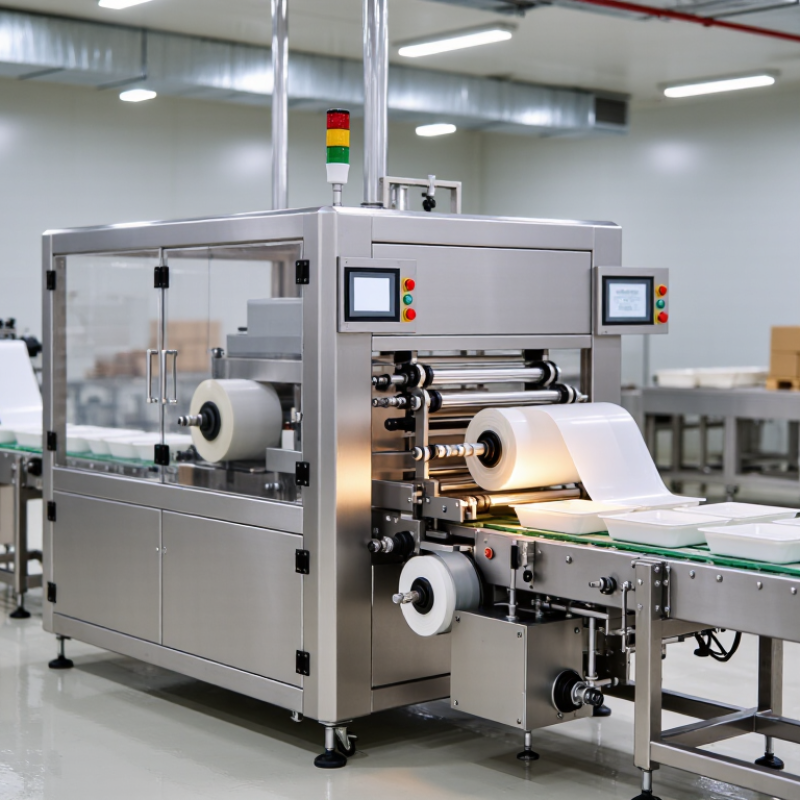
Lidding film machines apply a flexible seal over trays, cups, or containers. Their core process is simple: unwind the film, position it, heat the sealing tool, and apply controlled pressure. A clean seal needs accurate temperature, dwell time, and pressure. Small errors matter.
The Flexible Packaging Association’s 2024 industry report valued U.S. flexible packaging sales at about $40 billion in 2023. This scale reflects strong demand for reliable sealing and efficient material use. PMMI’s 2024 packaging machinery report also identifies labor shortages and automation as key purchasing concerns. Therefore, operators should examine film tracking, automatic tension control, and tool changeover time. Fast equipment is not always better.
Film type matters. Polypropylene, polyester, and multilayer structures can require different sealing temperatures. A machine should support the film’s seal-initiation range without overheating the tray. Check the sealing width, output speed, peel strength, and leak-test method. Modified-atmosphere packs need tighter control around gas flushing and seal integrity.
In practice, I would test the exact tray and film combination before approval. Never rely only on a supplier’s speed claim. A small wrinkle can become a leak. A small temperature drift can damage the seal. Smithers’ flexible packaging outlook shows continued pressure for material efficiency, but reducing film thickness may narrow the operating window. That trade-off deserves honest testing, not optimistic assumptions.
Choosing a lidding film machine starts with the package, not the machine catalog. Define the tray material, film structure, seal width, and target shelf life. Measure tray dimensions carefully. A two-millimeter variation can affect seal pressure and waste. Record product temperature, moisture, oil, and filling height. These details determine whether the process needs heat sealing, gas flushing, vacuum, or simple closure. Keep samples ready. Real samples reveal problems that drawings hide.
Production conditions matter just as much. State hourly output, shift length, floor space, operator skill, and cleaning frequency. A machine rated for 40 packs per minute may slow sharply during frequent film changes. Ask for performance data using your actual trays and film. Check temperature stability, pressure control, registration accuracy, and changeover time. Inspect guarding, emergency stops, and sanitation access. Food-contact applications also require documented material compatibility and traceable quality records.
Do not choose only by maximum speed. A stable 25 packs per minute can outperform an unstable 40. Calculate film consumption, rejected packs, electricity, labor, and maintenance. Request a trial run and keep sealed packs for leak, peel, and appearance tests. I once underestimated condensation during chilled production; the seal looked fine but failed after storage. That mistake changed our checklist. Still, every line has compromises. Leave room for adjustment, because your first specification may be incomplete.
How to Choose a Lidding Film Machine in 2026?
Compare Machine Types, Film Compatibility, and Sealing Methods
Choosing a lidding film machine starts with production needs, not machine appearance. Semi-automatic units suit changing products and lower volumes. Automatic inline systems support faster output and consistent feeding. Rotary machines can reduce floor space, but setup may be less flexible. In plant trials, operators should check loading height, cleaning access, and tool-change time. A machine that runs quickly may still waste labor during adjustments.
Film compatibility requires careful testing. Match the film structure with the tray material, product temperature, and storage conditions. Heat-sealable films often provide reliable bonds when pressure, temperature, and dwell time remain stable. Peelable films need controlled sealing energy. Excessive heat can distort the tray or make opening difficult. Barrier films may protect moisture-sensitive products, but they can require stronger sealing conditions. Small details matter.
Cold-seal systems can protect heat-sensitive contents, while heat sealing usually offers broader packaging control. Ultrasonic sealing may help with selected structures, though equipment cost and maintenance deserve attention. Ask for sample trials using your actual trays and film rolls. Measure seal strength, leak resistance, peel behavior, and visual defects. Do not rely only on a supplier’s demonstration. It uses ideal settings. Real production includes dust, film tension changes, and tired operators. No machine choice is perfect, and early assumptions often need revision.
Typical technical ranges for food, medical, and industrial tray-sealing applications. Actual performance depends on tray geometry, material combinations, product temperature, film coating, tooling, and local validation requirements.
| Machine Type | Typical Output | Best-Suited Applications | Compatible Lidding Films | Primary Sealing Method | Typical Sealing Temperature | Main Advantages |
|---|---|---|---|---|---|---|
| Manual Tabletop Sealer | Approximately 2–8 trays per minute | Small batches, product trials, restaurants, laboratories, and frequent format changes | PE, PP, PET/PE, APET/PE, and other heat-sealable laminates; peelable or permanent seal coatings may be used | Heated die or heated sealing plate; sealing is usually controlled by time and temperature | Approximately 120–200°C, depending on the film sealant layer and tray material | Low investment, compact footprint, simple operation, and flexible changeover |
| Semi-Automatic Tray Sealer | Approximately 5–20 trays per minute | Small-to-medium production runs, fresh foods, ready meals, bakery products, and testing facilities | Most common heat-sealable films, including clear barrier laminates, peelable films, and anti-fog films | Heated sealing tooling; optional vacuum or gas flushing may be available for modified-atmosphere packaging | Approximately 130–210°C, subject to film construction and dwell time | Better repeatability than manual equipment, moderate labor requirements, and relatively easy tooling changes |
| Inline Automatic Tray Sealer | Approximately 20–80 trays per minute | Continuous production lines, chilled foods, prepared meals, meat, seafood, produce, and dairy products | High-performance PE, PP, PET/PE, APET/PE, EVOH-containing barrier films, and recyclable mono-material films when properly seal-coated | Heated platen or heated roller sealing; vacuum and gas flushing can be integrated | Approximately 130–220°C, with controlled pressure, dwell time, and cooling | High throughput, consistent seal quality, reduced manual handling, and integration with conveyors and inspection systems |
| Rotary or Multi-Station Tray Sealer | Approximately 40–150 trays per minute | High-volume production requiring multiple sealing stations or several tray formats per cycle | Heat-sealable barrier and peelable films; compatible structures depend on the sealing tooling and tray resin | Multi-station heated sealing dies, often combined with vacuum and gas flushing | Approximately 140–220°C, depending on the sealing layer, tray material, and line speed | High output, balanced cycle times, efficient use of floor space, and good suitability for automated loading |
| Modified-Atmosphere Packaging Sealer | Approximately 10–100 trays per minute | Products requiring extended shelf life, such as meat, poultry, seafood, fresh produce, and prepared meals | Barrier films using structures such as PET/PE, PA/PE, PP-based laminates, or films containing an oxygen-barrier layer | Vacuum and gas flushing followed by heat sealing; the sealing process must maintain gas retention | Approximately 130–210°C, depending on sealant chemistry and machine speed | Supports controlled residual oxygen and gas composition when correctly configured and validated |
| Medical or Cleanroom Tray Sealer | Approximately 3–25 trays per minute | Sterilization trays, medical devices, diagnostic products, and controlled-environment packaging | Medical-grade coated paper, Tyvek-type porous lidding materials, PET/PE, and other validated sterile-barrier films | Precisely controlled heated sealing jaws or plates with documented temperature, pressure, and dwell time | Commonly approximately 120–180°C, but the validated range is material-specific | Accurate process control, traceability, seal monitoring, and compatibility with validation procedures |
| Induction Foil Sealer | Approximately 20–200 containers per minute | Rigid containers with threaded or snap-fit closures, including bottles, jars, and tubs | Foil-based induction liners matched to the container resin, such as HDPE, PP, or PET | Electromagnetic induction heats the foil layer and bonds the sealing polymer to the container rim | Coil and line settings are application-specific; the foil sealant layer commonly melts within approximately 120–200°C | Non-contact sealing, tamper evidence, high line speed, and suitability for closed-container applications |
| Film or Tray Combination | Typical Characteristics | Common Sealing Behavior | Suitable Machine Features | Selection Considerations |
|---|---|---|---|---|
| PP Tray + PP-Based Lidding Film | Good heat resistance and suitable for many chilled or microwaveable food applications | Requires a compatible PP sealant layer and adequate temperature, pressure, and dwell time | Heated platen, heated die, or continuous sealing roller | Check the tray grade, seal initiation temperature, peel performance, and processing temperature limits |
| PET or APET Tray + PE-Sealant Film | Common clear structure with good appearance and reliable sealing when the coating is matched to the tray | Usually provides a heat seal with either peelable or permanent opening behavior | Manual, semi-automatic, or automatic heat-sealing equipment | Confirm that the film sealant is designed for PET or APET rather than assuming all PE layers are interchangeable |
| CPET Tray + High-Temperature Lidding Film | Suitable for higher-temperature cooking or reheating applications when the complete package is validated | Needs a film and coating that withstand the intended thermal cycle without seal failure | Automatic machine with accurate temperature control, pressure control, and cooling | Evaluate oven or microwave exposure, flange flatness, seal integrity after heating, and dimensional stability |
| Paper or Board Tray + Coated Lidding Film | May support a paper-based package design, but the sealing coating must be continuous and compatible | Seal quality depends strongly on coating uniformity, flange cleanliness, and pressure distribution | Heated tooling with adjustable pressure and controlled dwell time | Test fiber tear, peel force, moisture resistance, and performance on the actual tray coating |
| Barrier Tray + Barrier Lidding Film | Used where oxygen, carbon dioxide, aroma, or moisture transmission must be limited | Requires a continuous seal with low leakage; film barrier properties alone do not compensate for poor seals | Vacuum or gas-flush system with seal inspection and stable tooling | Measure oxygen transmission, water-vapor transmission, residual oxygen, and package leak rate |
| Mono-Material Recyclable Structure | Designed to simplify material separation, subject to local recycling infrastructure and applicable design rules | Can have a narrower processing window than conventional multi-material laminates | Equipment with accurate temperature control, pressure control, and recipe management | Confirm recyclability claims, seal performance, puncture resistance, barrier needs, and end-of-life requirements |
| Sealing Method | How It Works | Typical Advantages | Typical Limitations | Best Selection Criteria |
|---|---|---|---|---|
| Heated Platen or Heated Die | Heated tooling applies heat and pressure to melt or activate the film sealant layer against the tray flange | Widely used, adaptable, and suitable for many film and tray combinations | Requires correct temperature, pressure, dwell time, and clean sealing surfaces | Choose this method for standard tray sealing and applications requiring reliable, repeatable seals |
| Heated Roller | Rotating heated tooling applies continuous heat and pressure as the tray or web passes through the machine | Supports continuous operation and high line speeds | Less forgiving of uneven flanges, warped trays, or inconsistent film tension | Choose it for stable high-volume production with consistent tray dimensions |
| Vacuum and Gas-Flush Heat Sealing | Air is removed or replaced with a selected gas mixture before the heated seal is formed | Can reduce oxygen exposure and support longer shelf life for suitable products | Adds equipment complexity and requires gas, leak, and residual-oxygen control | Choose it when product shelf life and package atmosphere are important performance requirements |
| Impulse Sealing | A short electrical pulse heats a resistance element, which seals compatible flexible films | Low energy use while idle and suitable for some flexible pouch or bag formats | Less common for rigid tray lidding and generally unsuitable for every tray-film combination | Choose it mainly for compatible flexible packaging rather than standard rigid tray sealing |
| Ultrasonic Sealing | High-frequency mechanical vibration generates localized heat at the sealing interface | Can tolerate some contamination at the seal area and may reduce external heat exposure | Higher equipment complexity and limited compatibility compared with conventional heat sealing | Consider it only after material trials confirm adequate seal strength and process stability |
| Induction Sealing | An electromagnetic field heats a foil liner positioned inside a closed container | Fast, non-contact, tamper-evident, and suitable for many bottle and jar lines | Not a general replacement for tray lidding; requires a compatible foil liner and container rim | Choose it for foil-lined rigid containers rather than open trays with conventional lidding film |
Practical selection rule: Select the tray and lidding-film combination first, then confirm the required sealing window through trials. The machine must provide sufficient control of temperature, pressure, dwell time, film tension, vacuum or gas conditions, and tooling alignment. Sealing temperatures shown are typical starting ranges, not universal setpoints; the film supplier’s technical data and package-validation results should determine final operating parameters.
Evaluate Performance, Automation, Safety, and Maintenance Features
A lidding film machine should prove its value on your production floor, not only in a brochure. Measure seal strength, cycle consistency, film alignment, and reject rates during realistic trials. Ask for results using your container shape, film structure, and product temperature. A machine that seals quickly may still waste film through small wrinkles or uneven edges. Watch the first hour after startup. Small errors often appear then.
Automation should reduce routine adjustments without hiding important controls. Look for recipe storage, automatic film tension control, sensor-based registration, and clear production data. Operators should change formats through guided settings rather than guesswork. Remote monitoring can help, but local access remains essential when connectivity fails. Keep it practical. Excessive automation may create new training problems.
Safety features deserve hands-on inspection. Check guarded moving parts, door interlocks, emergency stops, temperature alarms, and controlled access during cleaning. Maintenance should be equally visible. Tool-free film paths, removable sealing plates, accessible sensors, and diagnostic messages can shorten downtime. Ask how often lubrication, calibration, and seal-surface replacement are required. Request maintenance records from comparable installations.
I once underestimated cleaning time because the machine looked simple. That mistake affected the shift schedule. A short demonstration is not enough; observe changeovers, cleaning, fault recovery, and repeated sealing cycles before approving the equipment.
How to Choose a Lidding Film Machine in 2026?
Calculate Total Ownership Costs and Choose the Right Machine
The purchase price is only the visible part of a lidding film machine. Calculate film waste, electricity, labor, tooling, maintenance, and planned downtime. A machine costing less may consume more film through poor alignment. Check the sealing cycle with your actual tray sizes and materials. Ask for measured output, not optimistic catalogue figures.
Build a five-year cost sheet. Include installation, operator training, spare parts, cleaning time, and changeover labor. Record performance during an eight-hour production trial. A useful test might include 5,000 trays, two film rolls, and three format changes. Measure rejected packs and minutes lost between runs. Small losses become expensive at scale.
Do not trust every assumption.
Our early estimate once ignored compressed-air consumption and replacement sealing plates. That mistake changed the preferred machine. It also showed why supplier claims need independent verification. Request maintenance records from comparable installations, written utility requirements, and clear warranty conditions. A reliable supplier should explain limitations, not only speed. Choose automation that matches your staff, product volume, and technical support capacity. Extra features can look impressive, yet unused functions still increase training and repair costs. Review the spreadsheet with production, maintenance, and finance teams before approving the machine.
Five-year total ownership cost comparison by machine configuration
Costs are shown in U.S. dollars and represent a transparent planning benchmark. Actual ownership costs vary with output, local wages, utility rates, maintenance contracts, and machine utilization.