What Is the Best Box Wrapper Machine in 2026?
Choosing the best box wrapper machine in 2026 requires more than comparing speed, price, or stainless-steel appearance. A reliable decision begins with the product, carton dimensions, film type, line layout, and operator skill. PMMI’s 2024 U.S. Packaging Machinery Shipments Study highlights continuing investment in automation, driven by labor challenges, production efficiency, and flexible packaging requirements. These pressures are visible on real factory floors, where a machine may wrap hundreds of boxes daily while facing dust, changing formats, and unplanned stops.
Automation demand is also growing across manufacturing. The International Federation of Robotics reported 541,302 industrial robots installed worldwide in 2023, showing how manufacturers continue to invest in repeatable processes. However, robotics alone does not guarantee better packaging performance. A box wrapper machine must deliver stable film tension, accurate sealing, simple changeovers, and accessible maintenance. Small details matter. A poorly positioned sensor can create rejected cartons for an entire shift.
Sustainability adds another evaluation layer. Smithers’ packaging industry forecasts identify material reduction, recyclable formats, and operational efficiency as major market priorities. Yet, the most sustainable machine is not always the newest model. Energy use, film waste, spare-part availability, and service response deserve practical measurement. No machine wins every line. A high-speed model may struggle with fragile cartons or frequent size changes. This guide compares leading box wrapper machine technologies through measurable criteria, supplier credibility, and workplace experience. Some recommendations may remain imperfect. That is intentional, because real packaging decisions involve compromises, not showroom promises.
Classify Box Wrapper Machines by Format, Film Type, and Automation Level
Choosing the best box wrapper machine in 2026 starts with classification, not speed.
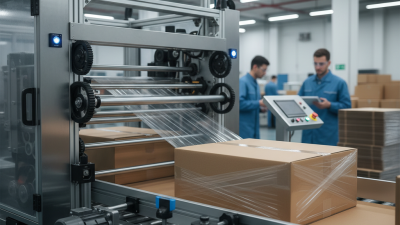
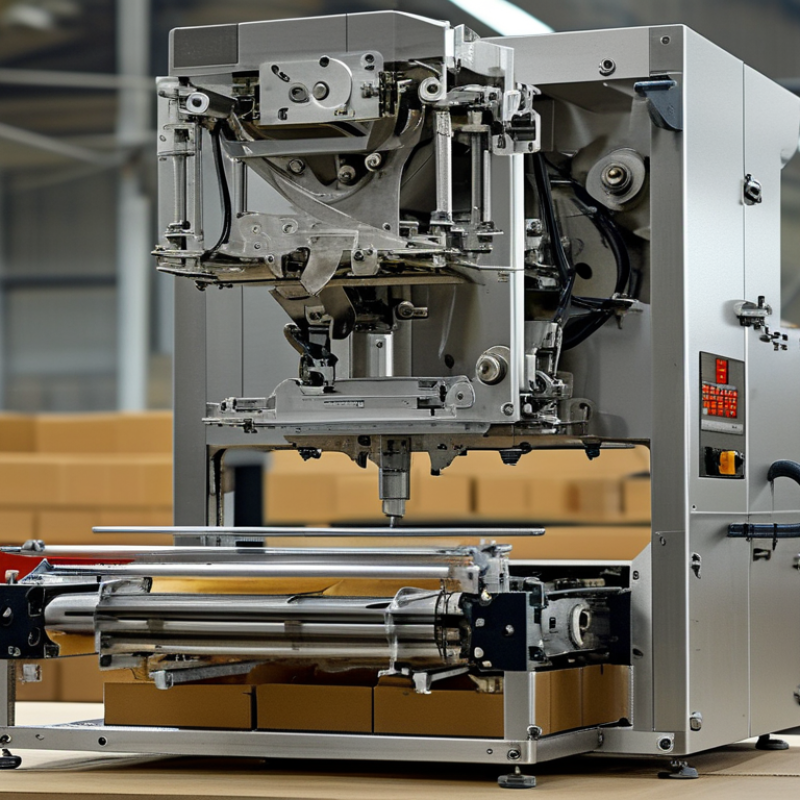
Format matters first. Horizontal wrappers suit retail cartons and irregular products, while side-load systems handle uniform boxes efficiently. Case and pallet wrappers serve heavier distribution loads. In real production, a machine that matches box dimensions consistently often outperforms a faster machine with frequent adjustments.
Film selection changes protection, cost, and machine settings.
Polyethylene film offers toughness and moisture resistance. Polypropylene film can provide clearer presentation and stronger sealing. Recycled-content films support sustainability goals, but they may require tighter temperature control.
Smithers’ The Future of Global Packaging to 2028 forecasts packaging demand to exceed 1.2 trillion dollars by 2028, increasing pressure to reduce material waste.
The figure is useful, though local film availability can alter the decision.
Automation should reflect labor, volume, and product variation.
Semi-automatic wrappers fit seasonal lines and frequent format changes. Fully automatic systems suit stable, high-volume operations with automatic feeding, film cutting, and fault detection.
The International Federation of Robotics reported 541,302 industrial robots installed worldwide in 2023, showing continued investment in automation.
Still, automation is not always the best answer. A poorly integrated conveyor creates expensive stoppages. Measure actual uptime, film consumption, changeover minutes, and operator access before purchasing. Small details matter.
Compare Throughput Using Boxes per Minute, OEE, MTBF, and MTTR
Choosing the best box wrapper machine in 2026 requires more than reading its advertised speed. Boxes per minute gives a clear starting point, but it shows only theoretical output. A machine rated at 30 boxes per minute may produce 22 during a normal shift. Changeovers, material adjustments, and brief jams reduce the real figure.
OEE combines availability, performance, and quality into one useful measurement. For example, a wrapper running at 85% OEE may outperform a faster machine operating at 62%. Track finished boxes, rejected packs, idle minutes, and planned stops for at least two weeks. Keep the data consistent. A neat spreadsheet can still lie when operators record downtime differently.
MTBF shows how long the machine runs between failures. Higher MTBF usually supports steadier production, but it needs context. A minor sensor fault and a major sealing failure should not receive identical treatment. MTTR measures repair speed, including diagnosis, access, part replacement, and testing. Ask technicians to record each stage. Short MTTR often depends on accessible components and clear maintenance procedures.
The numbers need human review. A machine may achieve excellent OEE during small batches yet struggle with large cartons. That weakness matters. Examine actual carton sizes, film changes, shift patterns, and operator training before selecting equipment. I would also question unusually perfect performance claims. Real production contains dust, rushed adjustments, and occasional mistakes. Those details affect every box per minute calculation.
Calculate Film Efficiency from Micron Thickness and Waste Rate
What Is the Best Box Wrapper Machine in 2026?
Film efficiency starts with measurement, not machine speed. Calculate film mass with this formula: box area × film thickness × film density. A 1.4-square-meter wrap using 23-micron film with 0.92 g/cm³ density consumes about 29.6 grams before waste. With an 8% waste rate, actual usage rises to 32.2 grams. Efficiency is 92%, calculated as 100% minus waste. Small errors become expensive across thousands of boxes.
A thinner film can improve results, but only when sealing remains stable. For example, 20-micron film uses about 25.8 grams per box before waste. At a 5% waste rate, effective usage reaches 27.1 grams. That saves roughly 5.1 grams per box compared with the 23-micron example. It sounds modest. It is not. On 100,000 boxes, the difference approaches 510 kilograms.
The Flexible Packaging Association reported that flexible packaging represented approximately 21% of the U.S. packaging market by sales value in its 2023 industry statistics. Smithers’ 2024 flexible packaging outlook also identifies downgauging and waste reduction as key development areas. These reports support a practical machine test: record film thickness, package dimensions, rejected wraps, and hourly output for one full shift. Do not trust a short demonstration. Real operators create variation. Corner damage, film tension, and roll changes can distort the result. A wrapper that uses less film but creates unstable seals may be efficient only on paper.
What Is the Best Box Wrapper Machine in 2026? – Calculate Film Efficiency from Micron Thickness and Waste Rate
| Machine Configuration |
Typical Box-Wrapping Application |
Film Thickness
(micron) |
Net Film Area
(m² / 1,000 boxes) |
Waste Rate
(%) |
Gross Film Issued
(m²) |
Net Film Mass
(kg) |
Gross Film Mass
(kg) |
Film Efficiency
(%) |
| Continuous horizontal wrapper |
Regular cartons with stable dimensions and high production volume |
25 |
1,000 |
3.2 |
1,033.06 |
23.00 |
23.76 |
96.8 |
| Intermittent horizontal wrapper |
Mixed carton sizes requiring controlled sealing and indexing |
30 |
1,000 |
4.8 |
1,050.42 |
27.60 |
28.99 |
95.2 |
| Vertical form-fill-seal wrapper |
Small cartons, multipacks, and products requiring vertical film forming |
40 |
1,000 |
5.5 |
1,058.20 |
36.80 |
38.94 |
94.5 |
| Side-seal flow wrapper |
Long or irregular boxes needing continuous longitudinal sealing |
35 |
1,000 |
6.1 |
1,064.92 |
32.20 |
34.29 |
93.9 |
| L-sealer with shrink tunnel |
Bundled cartons and multipacks requiring a tight shrink finish |
50 |
1,000 |
7.0 |
1,075.27 |
46.00 |
49.46 |
93.0 |
| Robotic stretch-film wrapper |
Large or palletized boxes requiring flexible-format wrapping |
23 |
1,000 |
8.5 |
1,092.90 |
21.16 |
23.13 |
91.5 |
|
Calculation basis: Gross Film Issued = Net Film Area ÷ (1 − Waste Rate).
Film Mass = Film Area × Film Thickness × 0.92 g/m² per micron, using a representative polyethylene film density of approximately 0.92 g/cm³.
Film Efficiency = 100% − Waste Rate.
|
Verify Machine Safety Against ISO 12100 and ISO 13849-1
What Is the Best Box Wrapper Machine in 2026?
The best box wrapper machine is not simply the fastest model. Its safety design must withstand a real risk assessment. ISO 12100:2010 requires hazards to be identified through the machine’s entire life cycle. That includes loading film, clearing jams, cleaning rollers, and maintenance access.
I would inspect the infeed tunnel with a ruler, not just a brochure. Can an operator reach the sealing area? Does opening a guard remove power quickly? ISO 13849-1:2023 guides designers in selecting the required Performance Level, or PLr, for safety-related control functions. Emergency stops, interlocks, and reset controls should be validated, documented, and tested under fault conditions.
Small details matter.
The U.S. Bureau of Labor Statistics reported 5,070 fatal work injuries in its 2024 Census of Fatal Occupational Injuries. This figure covers all industries, not wrapping machines, but it shows why safety assumptions deserve scrutiny. A supplier’s declaration is useful evidence, yet it is not a substitute for site-specific verification. The European Agency for Safety and Health at Work also identifies machinery risks as a continuing workplace concern across Europe.
In practical trials, watch the operator’s hands, line visibility, and restart behavior. A perfect risk assessment may still miss a rushed jam-clearing habit. I would record that weakness, redesign the task, and repeat the validation before purchase.
Rank Total Cost per Box by Energy, Labor, Maintenance, and Payback
What Is the Best Box Wrapper Machine in 2026?
The best box wrapper machine is not always the fastest model. It is the machine with the lowest total cost per box. A practical audit should measure electricity, operator time, film waste, service, spare parts, and downtime. Record at least four weeks of production data before making a decision.
Energy may cost only a few cents per box, while labor often costs much more. A machine running at 20 boxes per minute can still lose money when loading is slow or adjustments are frequent. Measure actual output, not the number shown on a brochure. Include standby power and rejected packages. Small leaks become expensive.
Maintenance needs careful attention. Ask for service intervals, common replacement parts, technician response time, and training requirements. My first estimate once ignored cleaning labor, which made the payback period look unrealistically short.
A better calculation is: purchase and installation cost divided by monthly savings. If a machine saves 2,000 dollars monthly and costs 24,000 dollars installed, the simple payback is twelve months. However, that result changes with seasonal volume, film prices, and unexpected downtime. Keep a reserve for repairs. It protects the spreadsheet from becoming fiction.