10 Best Automated Packing Machines for Your Business
Choosing the right automated packing machine can shape productivity, product quality, and daily operating costs. This guide examines ten practical machines for different business needs, from small workshops to high-volume production lines. Each option is assessed through measurable factors, including packing speed, filling accuracy, sealing performance, machine flexibility, and maintenance access. Real production environments rarely match brochure promises. Dust, uneven products, changing package sizes, and rushed changeovers can expose weaknesses quickly.
A reliable machine should fit the product before it fits the budget. Operators need clear controls, guarded moving parts, simple cleaning procedures, and dependable technical support. A weighing system may suit coffee or grains, while an auger filler can handle powders more consistently. For liquid products, pump selection and nozzle control matter greatly. Film compatibility also affects waste, seal strength, and operating stability. These details can determine whether a machine saves labor or creates another daily problem.
No machine is perfect.
This review also considers total ownership costs, not only the purchase price. Energy use, spare parts, training, downtime, and expected service life deserve careful attention. Industry specifications provide useful evidence, but independent testing and supplier references remain valuable. Businesses should confirm capacity using their actual products and packaging materials before purchasing. A machine that performs well in a demonstration may struggle during a twelve-hour shift. The final ranking is therefore practical rather than absolute, helping buyers compare suitable solutions with realistic expectations and fewer costly surprises.
How to Rank 10 Automated Packing Machines by Throughput, OEE, and ROI
10 Best Automated Packing Machines for Your Business
How to Rank 10 Automated Packing Machines by Throughput, OEE, and ROI
Ranking ten automated packing machines requires more than reading catalog speeds. Measure usable throughput during normal production, including loading, film changes, cleaning, and brief stoppages. A machine rated at 120 packs per minute may deliver only 86 on the factory floor. Real output matters.
OEE combines availability, performance, and quality. Record each machine’s run time, actual speed, rejected packs, and unplanned downtime across several shifts. Include changeover duration. A practical test should cover different package sizes and materials. Small faults often appear after hours of operation. They matter.
For a balanced ranking, score throughput at 35%, OEE at 35%, and ROI at 30%. Calculate ROI from purchase cost, labor savings, maintenance, energy use, waste reduction, and expected service life. A cheaper machine may lose its advantage through frequent adjustments. An expensive model may pay back faster with stable operation. Data decides.
I would also review operator feedback and maintenance records. These details reveal awkward controls, difficult access points, and recurring sensor issues. The ranking should remain flexible because product mix changes. One weakness remains: short trials can exaggerate performance. Longer observation is safer. Reliability cannot be guessed from a brochure.
10 Best Automated Packing Machines for Your Business
How to Rank 10 Automated Packing Machines by Throughput, OEE, and ROI
| Rank |
Automated Packing Machine Type |
Typical Package Format |
Rated Throughput |
Typical OEE |
Annual Operating Hours |
Installed Cost Range |
Labor Reduction |
Estimated Annual Operating Benefit |
Simple ROI |
Payback Period |
Overall Score |
| 1 |
High-Speed Vertical Form-Fill-Seal Machine |
Pillow bags and gusseted bags |
70–120 packs/min |
78–88% |
4,000–5,000 h |
US$120,000–250,000 |
2–4 operators/shift |
US$95,000–180,000 |
65–90% |
13–18 months |
91/100 |
| 2 |
Intermittent-Motion Horizontal Flow Wrapper |
Pillow-wrapped food and consumer products |
60–150 packs/min |
75–85% |
3,500–4,500 h |
US$100,000–220,000 |
2–3 operators/shift |
US$80,000–155,000 |
60–85% |
14–20 months |
88/100 |
| 3 |
Premade-Pouch Pick, Fill, and Seal Machine |
Stand-up pouches and flat pouches |
35–80 pouches/min |
72–84% |
3,500–4,500 h |
US$140,000–300,000 |
2–4 operators/shift |
US$90,000–170,000 |
48–72% |
17–25 months |
84/100 |
| 4 |
Vertical Auger-Fill and Bag-Sealing Machine |
Powders, flour, spices, and fine granules |
25–70 bags/min |
70–82% |
3,500–4,500 h |
US$90,000–210,000 |
1–3 operators/shift |
US$65,000–135,000 |
45–68% |
18–27 months |
81/100 |
| 5 |
Multihead-Weigher VFFS Packing Line |
Snacks, confectionery, and irregular solids |
45–100 bags/min |
70–83% |
3,500–4,500 h |
US$160,000–350,000 |
2–4 operators/shift |
US$85,000–165,000 |
38–60% |
20–31 months |
79/100 |
| 6 |
Cartoning Machine with Automatic Product Loading |
Folding cartons for bottles, sachets, and trays |
30–100 cartons/min |
68–80% |
3,500–4,500 h |
US$130,000–300,000 |
2–5 operators/shift |
US$75,000–150,000 |
35–55% |
22–34 months |
76/100 |
| 7 |
Case Erecting, Packing, and Sealing Line |
Transport cases and corrugated cartons |
8–25 cases/min |
65–78% |
3,000–4,000 h |
US$110,000–260,000 |
2–4 operators/shift |
US$60,000–125,000 |
32–52% |
23–37 months |
73/100 |
| 8 |
Tray Sealing and Modified-Atmosphere Packaging Machine |
Fresh food trays and ready-to-eat meals |
20–70 trays/min |
65–78% |
3,000–4,000 h |
US$130,000–320,000 |
1–3 operators/shift |
US$65,000–140,000 |
30–50% |
24–40 months |
70/100 |
| 9 |
Robotic Case-Packing and Palletizing Cell |
Bottles, cartons, cases, and mixed SKUs |
10–35 cases/min |
62–76% |
3,000–4,000 h |
US$180,000–450,000 |
3–6 operators/shift |
US$85,000–190,000 |
28–48% |
25–43 months |
68/100 |
| 10 |
Automatic Blister Packaging Machine |
Small hardware, medical, and consumer products |
20–55 cycles/min |
60–75% |
3,000–4,000 h |
US$150,000–400,000 |
2–5 operators/shift |
US$65,000–145,000 |
25–45% |
27–48 months |
65/100 |
Benchmark note: The figures are representative industry planning ranges for new equipment operating on a standard multi-shift schedule. Actual throughput and OEE depend on product characteristics, package size, changeover frequency, staffing, maintenance, and quality requirements. Simple ROI is estimated as annual operating benefit divided by installed cost; payback excludes financing, tax incentives, and residual value.
Machine Categories: VFFS, HFFS, Cartoners, Case Packers, and Palletizers
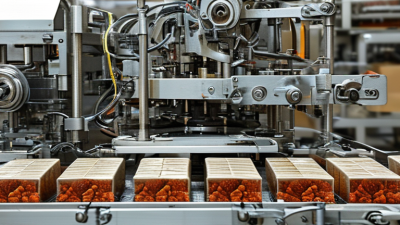
Choosing among automated packing machines depends on the product, package shape, speed, and available floor space. Vertical Form-Fill-Seal machines suit powders, grains, snacks, and other free-flowing products. They form bags from a film roll, fill them, and seal them in one compact cycle. Horizontal Form-Fill-Seal machines handle bars, bakery items, cartons, and products needing gentle horizontal feeding. Their sealing jaws require careful adjustment.
Cartoners place products into folding cartons and close them with glue or mechanical locks. They work well when presentation and consistent carton dimensions matter. Case Packers group finished packs into shipping cases, reducing repetitive manual lifting. Robotic or continuous-motion designs may improve output, but they need reliable product spacing. Palletizers arrange cases into stable layers for storage and transport. Layer patterns should match case strength, pallet size, and handling conditions.
A practical evaluation should include a production trial with real materials. Check changeover time, seal quality, sensor accuracy, guarding, cleaning access, and compressed-air use. Ask for maintenance records and operator training details. Small faults matter. A weak seal can spoil an entire batch. A poorly planned conveyor can create repeated jams. No machine is perfect, and advertised speed may not match daily production. Leave room for inspection, repairs, and future product changes. The best choice is not always the fastest machine; it is the one that performs safely and consistently under actual working conditions.
Performance Benchmarks: 30–120 Packs per Minute and 85%+ OEE
Automated packing machines are often advertised at 30–120 packs per minute. That equals 1,800–7,200 packs per hour. However, rated speed is not sustained output. Product shape, film changes, jams, and operator checks can reduce real production sharply.
The OEE Foundation identifies 85% OEE as a world-class benchmark. OEE combines availability, performance, and quality. A machine running at 100 packs per minute may deliver only 85 effective packs per minute at that level. PMMI industry reports also stress that packaging automation should be evaluated through total line performance, not machine speed alone. Measure changeover time, reject rates, and unplanned stops.
Small details matter. A misaligned pouch can trigger repeated sealing faults. A five-minute film change can erase hundreds of expected packs. Keep a daily log for speed, downtime, rejects, and labor hours. Then compare the figures against the supplier’s test conditions. Those conditions may use ideal products and fresh materials.
The 85% target is useful, but not universal. New lines often need adjustment. Complex formats may perform below it. A practical buying test should run your actual product for several hours, including planned changeovers. Ask for verified data, not optimistic demonstrations. Performance improves when maintenance routines, sensor calibration, and staff training receive equal attention. Perhaps the machine is not the weakest link.
10 Best Automated Packing Machines for Your Business
Performance Benchmarks: 30–120 Packs per Minute and 85%+ OEE
The chart compares representative automated packing-machine configurations by nominal throughput and overall equipment effectiveness (OEE). Actual performance varies with pack format, product characteristics, changeover frequency, operator practices, and maintenance conditions.
Cost Analysis: 20–40% Labor Savings and Total Cost of Ownership
10 Best Automated Packing Machines for Your Business
Automated packing machines can reduce repetitive labor by 20–40%, but the figure depends on line speed, staffing, and product variation. PMMI’s 2024 industry research identifies labor availability as a major reason manufacturers are increasing packaging automation. The International Federation of Robotics also reported 541,302 industrial robot installations worldwide in 2023, showing strong investment in repeatable production tasks.
Labor savings are only one part of total cost of ownership. A realistic model should include machine price, installation, controls integration, operator training, maintenance, electricity, film, changeover time, and planned downtime. For example, replacing three packing positions may save $120,000 annually in wages and benefits. A $300,000 system could appear to repay itself in 2.5 years. That calculation may fail when service contracts, line modifications, and slow product changeovers are ignored.
Check the details carefully.
PMMI advises evaluating equipment through lifecycle costs rather than purchase price alone. Record hourly output before installation, including short stops and rejected packs. Then compare results after 30, 90, and 180 days. A machine running 20% faster may still lose value if cleaning takes longer or skilled technicians are unavailable. Energy use also matters; the U.S. Department of Energy recommends measuring compressed-air losses because leaks can quietly increase operating costs. Savings are possible, but optimistic spreadsheets often hide the hardest costs.
Safety and Compliance: ISO 12100 Risk Assessment and Machine Guarding
When comparing the 10 best automated packing machines for your business, safety should lead the specification. ISO 12100:2010 requires a documented risk assessment across design, installation, operation, cleaning, maintenance, and foreseeable misuse. A fast packaging line can still fail this test if an operator reaches beneath a moving sealing jaw or bypasses a poorly positioned guard.
Start with the hazards, not the machine catalogue. Identify crushing points, heated surfaces, cutting blades, unexpected start-up, stored pneumatic energy, and access during changeovers. Then apply the hierarchy of controls: safer design, fixed or interlocked guards, presence-sensing devices, and clear lockout procedures.
Guards should remain practical. If removing one takes three minutes, workers may defeat it. That uncomfortable detail deserves attention.
The International Labour Organization estimated 2.93 million work-related deaths annually in its 2023 global report, with many linked to unsafe working conditions.
This figure reinforces why compliance cannot be treated as paperwork. During commissioning, verify stop functions, guard switches, reset locations, and safe access with real operators. A useful review should include a failed assumption or two. For example, cleaning may create greater exposure than normal production. Record residual risks, provide training, and reassess after every format change, speed increase, or tooling modification. Safety evidence should be traceable, current, and understandable to the people standing beside the machine.